
Lokmanthan Bhagyanagar 2024: Comprehensive Pradarshini Report
Pradarshini In-Charge
Introduction
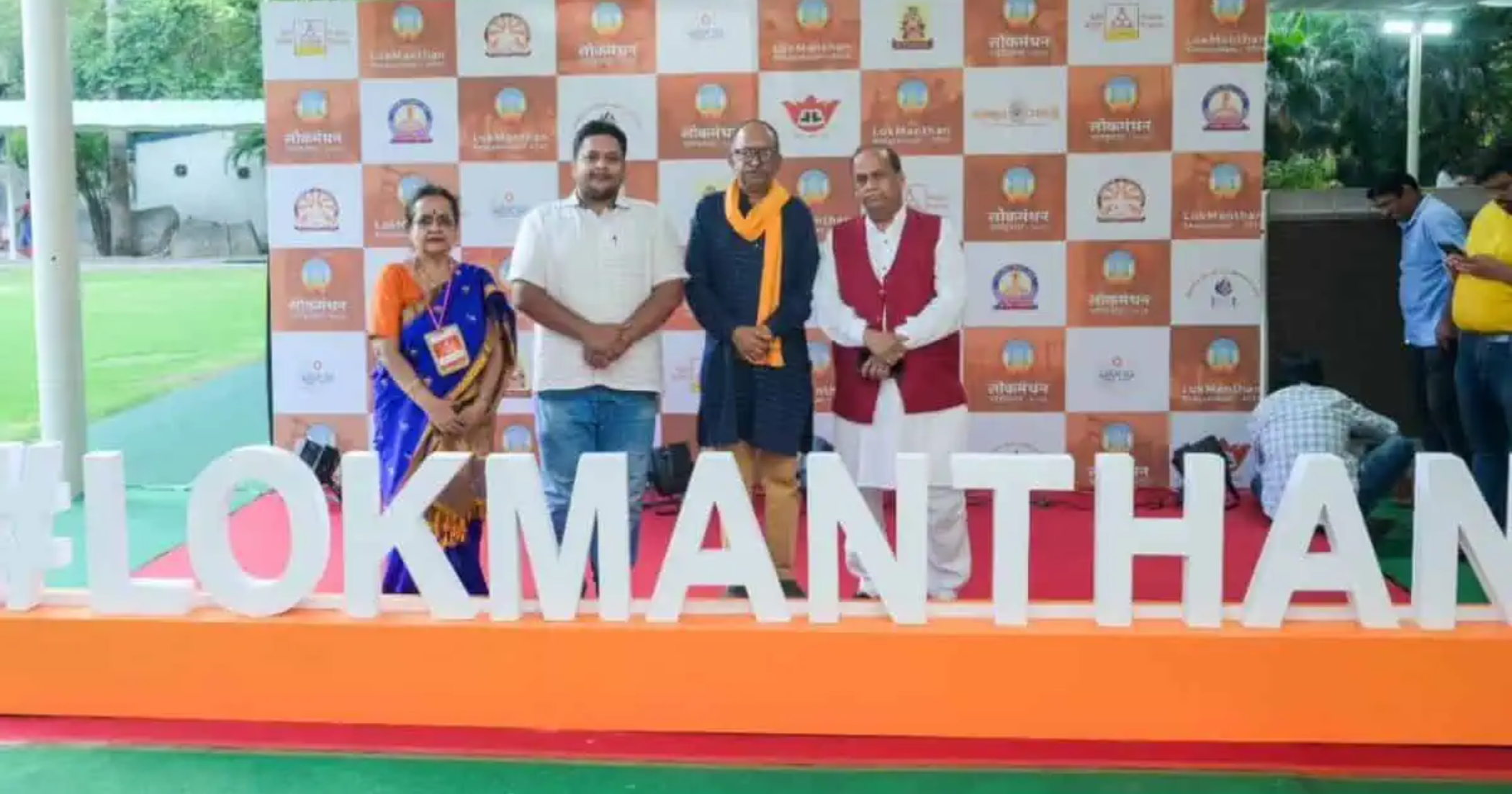
okmanthan was conducted from 21st to 24th LNovember, 2024 at Shilpakala Vedika and Shilparamam, Hyderabad, Telangana. It was a colloquium for celebrating the diverse yet unique culture that permeates through all layers of Indian society. Pradarshini was a major and crucial part of the Lokmanthan programme. It was aimed to showcase elements, which helped to break artificial divisions and build bridges for the different people of this civilisation with their varied thought processes, traditions and systems-all enriched by Bharatiyata.
Inaugurated by Her Excellency Smt. Droupadi Murmu, Honourable President of India, on 22nd November, 2024, Lokmanthan went on to become a grand success. The Pradarshini (or exhibition) attracted the attention of a large number of people as it displayed nostalgic, native Lok traditional arts, crafts, literature, etc. at the event. Delegates and guests could witness a multitude of invaluable cultural treasures at this Pradarshini.
Pradarshini and Its Volunteers
In order to successfully conduct this international level event on a grand scale, relentless and meticulous efforts were put in by all the volunteers. One such volunteer was Shri N Vijay Kumar, who was assigned the responsibility of the Pradarshini. He coordinated and liaised with multiple agencies, government authorities, craftsmen and workers from time to time to ensure that the events were organised in a smooth and effective manner. His dedication and 24/7 availability before, during and after the event ensured that the Pradarshini was conducted in flawless fashion. He assisted the senior-most organisers as a trouble-shooter in various administrative and management aspects, whenever and wherever roadblocks for the programme emerged.
Establishing Pradarshini (Exhibition)
Planning, preparation and execution of the Pradarshini part was the responsibility assigned to Shri Vijay Kumar, in line with the core theme of the event. Meticulous planning, detailed preparation and elegant display of the exhibits attracted huge crowds on a daily basis during the course of the exhibition, which was greatly lauded by all the people.
Planning Stage
Shilparamam/Shilpakala Vedika: The venue has three different types of spaces: Rock Heights, Mountain Height and Sampradaya Vedika, which are pre- booked for weddings. Shilparamam is a society that runs based on its own by-laws and a self-sustained revenue model. It has several departments under the supervision of a Special IAS Officer, with his team of General Manager, Public Relations Officer, Vigilance and Security, Engineering Department, Cleaning, Landscape, Labour Supply, etc.
For us to use the venue, they had to close down their operations, cancel wedding bookings and hand over the venue to us. This was a significant challenge, but we managed to achieve it under certain conditions and restrictions. These included not spoiling their landscaping, ensuring non-commercial activities and agreeing to the non-sale of items.
Pavilion- Music

Shri Tallapaka Annamacharya
Shri Tallapaka Annamacharya (1408–1503), popularly known as Annamayya, was a saint-poet and a pioneering composer of Carnatic music. Born in Tallapaka village of present-day Andhra Pradesh, he displayed deep devotion to Lord Vishnu from a young age, particularly to Lord Kesava, the village deity. At sixteen, after a divine vision of Lord Venkateswara, he began composing devotional songs spontaneously. Driven by spiritual calling, Annamayya set out to Tirupati on foot, where he received further divine guidance in a dream. Inspired, he composed Shri Venkateswara Sathakamu, a hundred stanzas in praise of the goddess and later many more devotional compositions.
Throughout his life, Annamacharya composed daily hymns, reportedly creating over 32,000 songs dedicated to Lord Venkateswara. His compositions were later inscribed on copper plates and stored in the temple’s Sankirthana Bhandaramu by his son, Peda Tirumalacharya. His works are broadly classified into Adhyatma Sankirtanalu (spiritual hymns) and Sringara Sankirtanalu (romantic hymns), reflecting divine love and philosophical depth. In addition to Telugu works like Dwipada Ramayanamu and Sringara Manjari, he authored Sanskrit texts such as Venkatachala Mahatmyamu and Sankirtana Lakshnamu.
At the outset, the rules of place allotment of Shilpakala Vedika were not in favour of conducting the Exhibition by the Lokmanthan team, as the proposed venue was fully engaged in its routine activities and could not suddenly stop its crowd of daily guests by allocating the venue for Lokmanthan. Shri Vijay Kumar, with due approvals of senior organisers, stepped in and took up the responsibility of convincing the government liaisons and Special Officer of Shilparamam/Shilpakala Vedika (a retired IAS Officer who was a stickler to rules and procedures). Shri Vijay Kumar held innumerable personal as well as official meetings with the special officer of the venue. Being a lawyer himself, he was able to convince the officer and impress upon other government officials with his humble and polite attitude. Furthermore, to strengthen his stand, he prepared and provided suitable answers/solutions to all the queries raised by them and also submitted various required documents whenever asked. He also provided undertakings at personal responsibility and risk (where demanded).
This process took away some valuable preparatory time as things could progress only upon allotment of the venue. Also due to heavy pre-bookings, the venue was handed over only on the evening of 18th November, 2024, leaving just 36 short hours to accomplish the humongous tasks at hand and make things ready by 20th November, 2024. Once this was done, security personnel would take over the venue in view of our Honourable President’s visit to inaugurate the event on 22nd November, 2024. The timeline posed a major challenge as a lot of work was to be done simultaneously and meticulously, such as recce of the venue, deciding the locations for each sub-part, vehicle parking, allotment of decided locations to different programmes and exhibitions, construction of various art structures and their installation after finalising the locations, scheduling of events, seating arrangements, ensuring the availability of toilets, Public Address (PA) equipment, signage printing, stage backdrop posters, direction maps, information bulletins to all the organisers, central public announcement arrangements, etc. Upon receiving the official confirmation of the allotment of the venue, the Pradarshini in-charge Shri Vijay Kumar undertook the following actions swiftly, as he effectively guided his team of craftsmen and workers to expedite the works and complete them on time.
Survey of the Venue
The Pradarshini in-charge firstly obtained a survey map of the venue promptly, so that he could conduct a systematic study of the site on the map to decide the suitability of the locations as per the space available for the programmes to be conducted. Once he identified and earmarked the locations on the map, he quickly proceeded to do a ground recce and planning. After correlating venues on the map and on the ground, he and his team identified various pavilions/stages keeping in mind the suitability for the programmes and displays. The stages being offered in the venue were largely falling short for conducting multiple events designed for the Lokmanthan programme. However, through his recce and planning, the Pradarshini in-charge identified some of the vacant shops and empty free spaces that were lying unused in the venue. After due liaison with the venue authorities, he charted out a plan on how to utilise them for the Pradarshini and other programmes of Lokmanthan. A total of 29 pavilions, 36 open stalls for different concepts and 23 other stalls were created through sheer improvisation. All of these were soon properly utilised for the Pradarshini and other events. After meticulous study of the locations of the entire venue the following major pavilions/stalls/stages that were available or created through improvisation were utilised:
Sampradaya Vedika
Amphitheatre
Open Area behind the Village Museum
Mountain Heights
Rock Heightss
Enclosed Area beside Sampradaya Vedika
Open Area near the Entrance
Open Area to the left of the Amphitheatre
Open Area before the Village Museum
J) Open Area near Mountain Heights
k) Open Area behind KFC
l) Open Area with the Krishna Arch (Brundavanam)
m) Tile Area opposite to the Krishna Arch (children’s
play area)
n) Gau Seva beside Sampradaya Vedika
o) Vacant Canteen (Chhattisgarh musical exhibition)
p) Ethnic Hall
q) Shilpakala Vedika Entrance tiled area and steps
r) New Stage beside Rock Heights.
Later each of the identified and earmarked locations was mapped with proper measurements/sizes in finer details so as to allocate them for different displays/ programmes based on their concept and requirements. Thereafter, each pavilion was allocated as per the schedules of number of programmes to be conducted each day. As Lokmanthan 2024 was being conducted in Telangana, Shri Vijay Kumar discussed in detail with Shri Ravindra Bharati, Shri Ruchir Gupta and Shri Rajeev Ranjan, in order to seek their valuable guidance for finalising a Telangana-based theme for Lokmanthan 2024.
This was so that all the attendees could relate to their great ancestral history while learning about their common roots and origins, in spite of the regional variations existing today. The theme of the Kakatiya dynasty belonging to Telangana State was decided based on its historic and cultural relevance by the members and given to the Pradarshini in-charge to formulate and present the exhibits accordingly. An icon of bravery, Rani Rudrama Devi (who reigned from 1262-1289), was known to have belonged to the Vanvasi community. She had ruled the great Kakatiya kingdom, which extended from Telangana to Andhra Pradesh, parts of eastern Karnataka, Northern Tamil Nadu and Southern Odisha, with the capital of the dynasty being called Orugallu (present day Warangal) during her reign.
Preparation stage
Once the concept of the Kakatiya dynasty was finalised for Lokmanthan, the various other elements to be showcased were decided. The venues, display areas and exhibition locations, as per the sizes, designs, likely number of attendees, time schedules, etc., were planned and allocated. The various elements were determined after a thorough analysis based on the core theme, with the aim of showcasing them to the delegates, guests and attendees. The placement sequence in different parts of the venue was carefully planned by the Pradarshini in-charge and his team, ensuring that viewers could better understand the antecedents, assimilate the history and culture and be inspired. For this purpose a preliminary sketch for locating the various exhibits was made by Shri Vijay Kumar and later, with the help of the architect Shri Surya Narayan ji, a final detailed map of the same was prepared. Subsequently, the Pradarshini in charge proceeded to make walk-through videos for clarity, after a proper ground and location analysis, while keeping in view the likely routes to be taken by the viewers and eye-catching sites in the venue.
Simultaneously, separate administrative areas, not visible in the display area, were identified near the prominent entrances/spaces designated for the placement of exhibits. These areas were allocated to craftsmen, sculptors and workers, allowing them to fabricate their exhibits efficiently near the designated site and install them quickly, without wasting time on transportation. All the craftsmen were hired carefully after examining their expertise and experience in their profession, such as the making of idols, statues and sculptures. The Pradarshini in-charge searched, carefully scrutinised, selected and provided each craftsman or sculptor with high-quality photographs to highlight the finer details of the required elements, thereby facilitating the precise fabrication of the exhibits in accordance with the selected themes of the Kakatiya dynasty. All the exhibits/elements which were prepared with such care and foresight were not only fabricated perfectly well in time, but also reflected the originality, authenticity, ethnicity and life in them.
The following are the various elements decided and placed at different locations:
a) Keerthi Toranam
b) Ramappa Temple
c) Nandi (Veyi Sthambala Gudi)
d) Rudrama Devi on Simhasanam
e) Goddess Bhadrakali
f) Prafulla Kumari Devi on Simhasanam
g) Goddess Peddamma Talli
h) Goddess Danteshwari
i) Hurre Maharaj Dev Swaroop
j) Dolkal Ganesh
k) Tribal Hut
l) Dantewada Toranam.
Execution Stage
With meticulous planning and preparation, all the exhibits were prepared on time and placed in different pavilions at prominent, eye-catching locations. All the displayed exhibits attracted a huge number of people, drawing their attention and interest during the period of the exhibition. One of the major challenges faced was when the police objected to the erection of the Kakatiya Toranam, one of the key elements. This grand structure was proposed to be displayed at the main entrance of the venue, as it showcases the splendour of the Kakatiya dynasty. The Kakatiya Toranam is a well-known, signature symbol of the dynasty and its absence would have adversely affected the significance of the theme. However being aware of its importance in the exhibition, the Pradarshini in-charge convinced the police personnel and resolved the issue by giving a written undertaking to them taking full responsibility at personal risk, as demanded by the security officials. This was in case of any untoward incident arising from the installation of the said “Toranam” (entrance gate symbol of Kakatiya dynasty similar to the original one present in Warangal, the capital of the Kakatiyas) as it is located at the main entrance, through which the Honourable President’s convoy would pass during her visit to Lokmanthan to inaugurate the event. In addition to the exhibition part, the following activities were also actively and promptly undertaken and organised by Shri Vijay Kumar—keeping in mind the criticality of the available timeline—in an effective and efficient manner.
a) Arrangements in each pavilion as per the programmes to be conducted/activities to be showcased, in line with the scheduled time slots. Additionally, preparing and placing the stage backdrop posters, banners of the events, signages, route maps, etc.
b) Arranging audio-visual equipment, screens, etc. as per the programmes to be held
c) Organising LED lights and boards at the various venues, including the Amphitheatre
d) Organising seating arrangements, tents, dust bins, drinking water, toilets, etc., at all locations
e) Providing tables, chairs, table covers, dust bins, lights, etc. for the open stalls
f) Organising accommodation for key volunteers and essential staff such as cooks, housekeeping staff, technical staff, etc. and providing equipment such as cooking utensils, tables, chairs, etc. for their comfortable stay at the venue campus
g) Installing audio visual boards, scrolls, electronic screens, mics, PA equipment, etc. wherever required
h) A central control room was created to coordinate and organise daily matters/issues
i) PA equipment for general announcements at the campus
j) Separate venues were provided for showcasing
exhibits, which are as given below:
At Shilpakala Vedika:
i) Dholkal Ganesh
ii) Nandi Statue
iii) Bhadrakali Statue
iv) Danteshwari Mata Statue
v) Danteshwari Gate
vi) Pedamma Gudi (Temple)
vii) Rudrama Devi Statue (8ft)
viii) Prafulla Kumari Statue (7ft)
ix) Kakatiya Toranam Entrance Gate (big)
x) Kakatiya Toranam Entrance Gate (small)
xi) Vanavasi Huts (6 huts)
xii) Ramappa Temple
At Shilparamam:
i) Vanavasi (total setup)
ii) Caves (Guhas)
iii) Hampi Cart
iv) Rudrama Devi Statue (16ft)
v) Two huts for Cow and Musical Tree
vi) Set up for Musical Instrument Display – (Moola Dhwani Exhibition at Ethnic Hall).
Moola Dhwani
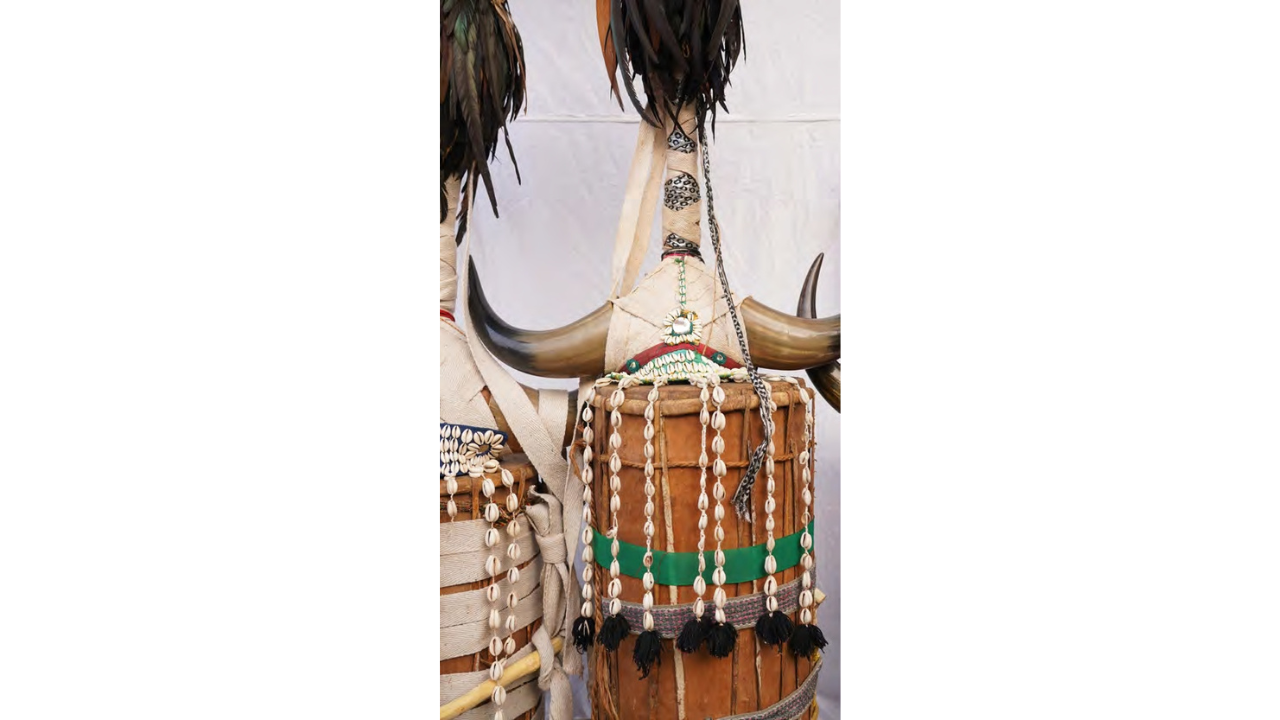
Moola Dhwani musical exhibition: Prof. Jayatirth Tirumala Rao has a vast collection of rare traditional musical instruments, some of which were on the verge of extinction due to the absence of performers or artists playing them in recent times. The instruments exhibition required meticulous display, blacked-out windows and ventilators and lighting arrangements befitting their importance. This was so that each instrument’s unique characteristics were highlighted and could be properly viewed by visitors.
Carefully designed entry and exit loops guided the visitors, ensuring they could view all the instruments in an organised manner. Handling and transporting around 350 antique items demanded special arrangements for packing, transportation and unpacking to ensure their safety. The logistics also included transferring these priceless items from two different locations, emphasising the need for efficiency and utmost care.
The pavilion for musical instruments called Music Tree and another pavilion that was created to display cow and bull ornaments were both housed in traditional huts, with proper lighting and barricades. This comprehensive effort aimed to preserve and showcase the invaluable cultural heritage represented by these rare musical instruments.
Chhattisgarh musical instrumental exhibition
This exhibition featured traditional musical instruments from the region of Chhattisgarh and beyond. Creating the right ambience was crucial. To achieve this, the room was completely blacked out using black cloth and spotlights and special lighting were installed to highlight the instruments. We also placed bars around the instruments to prevent people from touching them, ensuring their preservation and allowing viewers to appreciate their beauty in a controlled environment.
Kakatiya Toranam
Transporting and installing the life-sized Kakatiya Toranams presented significant challenges. Due to restrictions on heavy vehicle entry into the city during the day, the operation of transportation and installation could only be carried out during night as traffic was less at that time. This process required the use of a crane to ensure the Toranams were installed properly. Stability was crucial because the President’s convoy would pass by at high speed underneath and any sort of instability would be hazardous. To make things more difficult, a notice was given to remove the Toranams, but after much effort and persuasion, the authorities were convinced to allow the Toranams to remain in place.
Other Pavilions
Many theme-based pavilions were created for the event. We designated different locations in Shilparamam in alphabetical order to make them easily identifiable. Allocating areas for the various pavilions based on their suitability was a challenge. We also had to coordinate with the performers and exhibitors to understand their requirements.Provisions were made for setting up sound and light systems for all the pavilions. Additionally, for the convenience of visitors, it was necessary to illuminate all the paths in Shilparamam with floodlights, as they would otherwise be poorly lit.
These pavilions were set up with the necessary amenities, including stages, tents, chairs, tables and sofas. These arrangements were ensured for all programme venues and any sudden requirements were met without difficulty.
Shri Vijay Kumar and team also set up stalls, providing them free of cost to organisations and individuals working in areas and themes related to Lokmanthan. This initiative aimed to support and encourage those who contributed to the cultural and thematic essence of the event, allowing them to showcase their work and engage with a larger audience.
All of these achievements were made possible with the Pradarshini in charge’s dedicated team—Swapna ji, Vishnu Vardhan Chowki ji, Sridhar Peddi ji, Racha Srinivas ji and Raghu Vemaraju ji—along with various Pavilion coordinators and facilitators. Their commitment and efforts were invaluable in bringing everything together seamlessly.
Signages and Public Information System
Given the expansive area of Shilparamam and the numerous pavilions and exhibitions, the team anticipated that spectators might find it challenging to navigate and be aware of all the attractions. To assist visitors and ensure that they do not miss any opportunity to view the exhibitions and pavilions, several measures were implemented:
a) Signages and Venue Route Maps: clear signages and detailed venue route maps were created to guide spectators efficiently through the site
b) Banners and Dais: Banners and daises were made for all pavilions to make them easily identifiable
c) LED Display Boards: These were set up at various locations to highlight performances, with choice backgrounds to create an appealing ambience for the viewers
d) Public Address System: The PA system was installed to announce the schedule of each performance and its location, keeping the audience informed
e) Shift Teams: To manage all of the above mentioned tasks, teams were formed to work in shifts throughout the day.
These initiatives were aimed at enhancing visitor experience and ensuring seamless and enjoyable exploration of the exhibitions and performances. The exhibition setup that was established covered the following pavilions/stalls/elements as per the requirement of the various state governments’ tourism departments, which participated in the exhibition:
Pavilions
1. Rajasthan
2. Delhi
3. Tripura
4. Madhya Pradesh
5. Uttar Pradesh
6. Samarastha Pavilion
7. Nationalist Hub TV Channel Stall
8. Indoor Games
9. Goseva Pavilion
10. Literature Pavilion
11. Healing Pavilion
12. North-East Pavilion
13. Spiritual Pavilion
14. International Pavilion
15. Cow Ornaments and Musical Instruments
16. Music Tree
17. medicinal Plants
18. Food and Agriculture Pavilion
19. Traditional Games
20. Storytelling
21. Samvaad.
Static Exhibitions
1. IGNC Photo Exhibition
2. Vanavasi Photo Exhibition
3. Ethnic Hall Music Exhibition (Adi Dhwani museum)
4. Vishwakalam (Guinness Record Pen)
5. Painting on Bharatiya Concepts
6. Musical Instruments Chhattisgarh
7. Photo Exhibition (Sampradaya Vedika–wall hung)
Live Exhibitions
1. Grameena Vrutthulu (village crafts)
2. Lohakala
3. Mattikala
4. Daaru Shilpakala
5. Rathi Shilpakala
6. Battala (cloth) Meeda Bommala Kala
7. Nakashi Chitra Kala
8. Sangeeta Vadya Tayari
9. Itthadi (brass) Vigraha Kala
10. Lavanya Arts & Crafts & Tastes (Amalapuram)
11. Bamboo
12. Gudia Maker
13. Natural Hand Painting and Maheshwari Sarees
14. Textile Pavilion (Maggam) (Loom).
Cultural Dais and Programme Venue
1. Sampradaya Vedika
2. Amphitheatre
3. Mountain Heights
4. Rock Heightss
5. Rock Heightss New Stage
6. Enclosed Area beside Sampradaya Vedika
7. Open Area Near Entrance.
At Shilpakala Vedika, the army band that was arranged for the presidential visit involved liaising with the army authorities of Hq Telangana and Andhra sub-area (Hq TASA) and AOC centre. The above venues were designated for the suitability of the 160 art forms organised by Samskara Bharati, which made the venue arrangements according to the programme requirements–including tents, stage backdrops, chairs, carpets, LED screens, sound and lighting, makeup rooms, toilets, housekeeping and so on. They also worked closely with the dais coordinators. There were also 23 theme-based stalls indoors and 36 stalls in the open area, all connected to the Panca Parivartan concept of Lokmanthan.
Challenges Faced
Shri Vijay Kumar’s team received the venue on the night of 18th November. They had to race against time to establish the entire exhibition in a very short span. The Honourable President’s visit required them to set up the exhibition within 48 hours and hand over the premises to the SPG by the night of the 20th. This was an extremely challenging and critical time, necessitating round-the-clock work under significant stress. They had to pull together as a cohesive unit, working tirelessly day and night to ensure everything was completed on time and to the highest standards. The Pradarshini in-charge and his team faced numerous issues due to security restrictions in the venue. Their vehicle movement was restricted and even coordinating with the Shilparamam staff (who controlled the locks and keys) required persistent follow-up. However, the team managed this through personal persuasion and successfully motivated the Shilparamam staff to be present at the venue.
The team coordinated with ISW, local police, revenue authorities, traffic police, R&B, GHMC and Shilparamam staff in order to get the work done smoothly. They conducted full dress rehearsals for the President’s visit. Being a private organisation, this was a significant challenge, but they accomplished it with commitment and team work.
Conclusion
Pradarshini, as part of Lokmanthan 2024, Bhagyanagar, portrayed the nation’s diverse yet unified culture. This exhibition helped to dismantle the perceived artificial divisions and notions among people from varied backgrounds, thought processes, traditions and systems successfully. It brought people together to understand and discover their common origin and find their roots of Bharatiyata.
All the organisers and volunteers, who enthusiastically worked in Pradarshini, truly contributed in bringing people together towards nationalism and were instrumental in instilling inspiration and integrity among people. Pradarshini inculcated a brotherhood among people as it showcased authentic and historic elements, which transported them back into their history and helped them connect with their rich heritage, unified culture, motivating common roots